What is Screen Scraping
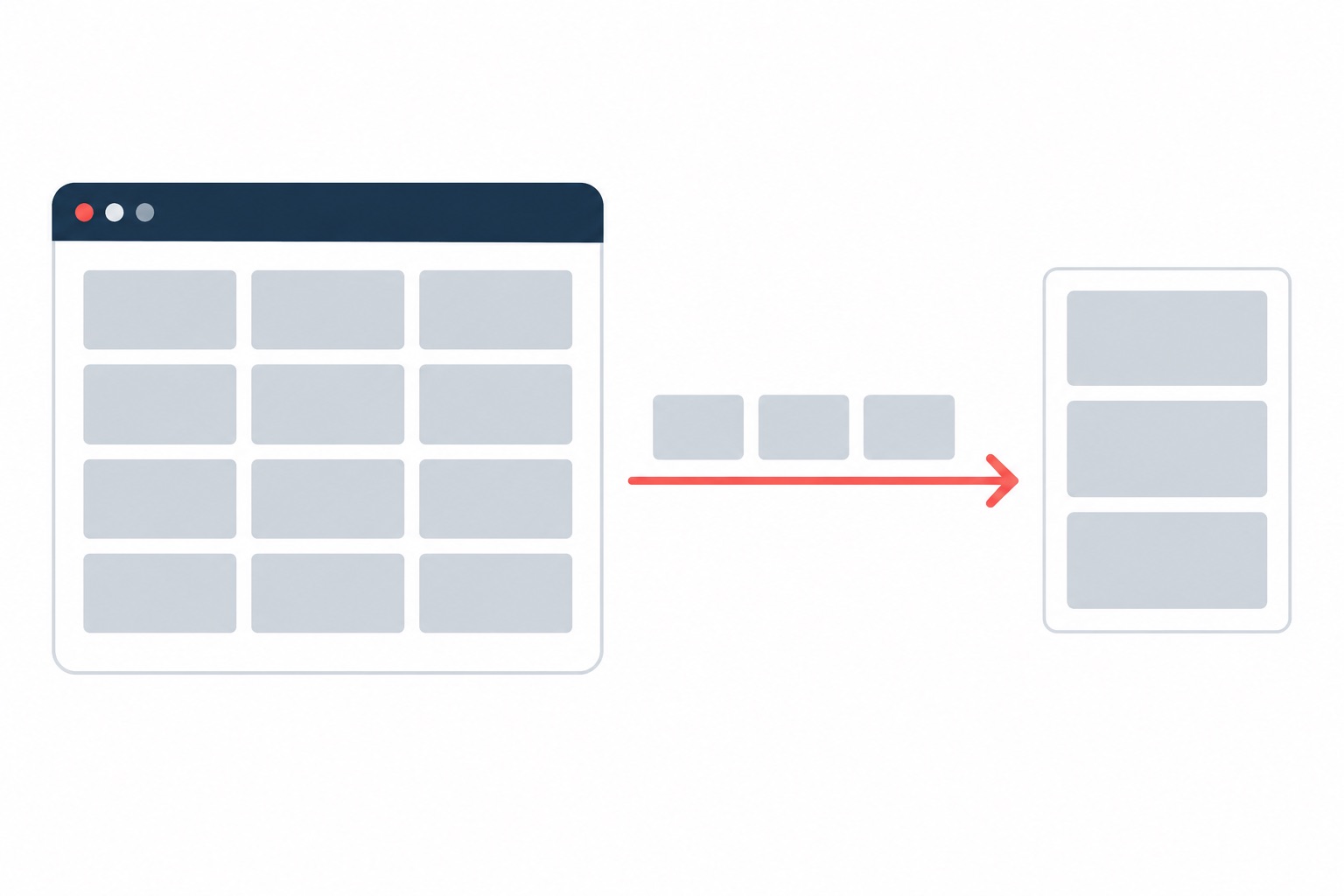
In short, screen scraping is an automated process that will extract data from websites. The main difference between
web indexing and screen scraping is that while web indexing will index the entire content of a web page, screen
scraping targets specific information or data on the web page. The reason an automated process is used is due to the
fact that not only is the process faster, thereby increasing the efficiency of the task, because the task utilizes
pre-configured code (the code may also be modified for specific tasks), the process, overall, has a lower risk of
errors manifesting in the extraction of the data. The specific mechanism of how a screen scraper works is by using
parsing to parse a website (i.e., most commonly used for websites which use either HTML or XHTML), the data is
categorized into a dataset and then stored (Dongo et al., 2020). The purpose of screen scraping is to take
information from one source to add it to another source, for one. Second, screen scraping is a beneficial process
for archiving and tracking data, as well as changes in the data (Library Carpentry, n.d.).
Ethics/Legalities of Screen Scraping
There are some ethical and legal considerations to keep in mind with screen scraping. The ethical aspects are
centered around how data is accessed and used through screen scraping. In addition, legalities are also connected to
the way that data is scraped, or otherwise accessed and the purpose behind how the data will be used. The legal
aspect of screen scraping involves the illegal access of and use of data. Screen scraping of public data is
perfectly legal.
If screen scraping is used for accessing and extracting data from intellectual property, proprietary and
confidential data (i.e., trade secrets) from sensitive domains, personal data, or data protected by international
regulations, this would be illegal, however. Other illegal access and use associated with screen scraping include
violating the Digital Millennium Copyright Act (DMCA), violating the Computer Fraud and Abuse Act (CFAA), or
deliberate or non-deliberate trespassing of digital domains (GeeksforGeeks, 2023). This is especially the case if
one brute forces, or breaches secured domains, though this is not necessary for illegal use. The mere access,
extraction and use of non-public data through screen scraping is illegal (Krotov et al., 2020). As mentioned, ethics
are tied to the legal discourse associated with screen scraping. An additional and important ethical consideration
to be made when deciding to use screen scraping tools is that websites that rely on advertising monetization are
negatively affected. The reason for this is because a screen scraper tool’s interaction with advertisements on a
website do not count as a human view, and as such, no advertisement revenue is generated (Persson, n.d.).
In short, it is not ethical to use private data for either archiving, or publication in the public domain, where this
information will lead to the violation of individuals’ or entities’ personal or sensitive information,
respectively, firstly. Secondly, copyrighted data could be used for malicious means insofar as for profiting on
(Krotov et al., 2020).
Pros and Cons of Screen Scraping
The Advantages to using screen scraping include, most notably, the automated extraction and transformation of data
that is added into structured datasets. This serves as a convenience and simplifies the process of gathering data.
Cutting/pasting data is not only time consuming, but is cumbersome and is not a task easily completed for large
datasets. Another ancillary supportive mechanism of using screen scraping is that errors are easily identified,
which can then be fixed more quickly (Bauer, 2021).
Cons of screen scraping, on the other hand, largely manifest as the challenges that can arise in their use. As many
websites have adopted methods such as Captcha or IP blocking to detect and ban bots (such as screen scrapers), this
act alone can defeat the purpose of using a screen scraper. Furthermore, screen scraping can at times be slow to
process for the reason that screen scraping software will often query numerous requests. Querying of numerous
requests may cause the parser to incorrectly interrupt refreshing a website to continue the scraping process,
resulting in an interruption of data collection (Techvice, 2021). Still, because screen scrapers make use of
site-specific programming code, there is a need to manually update the scraper’s programming code if there are
changes in the HTML code of the targeted website(s) (Dongo et al., 2020).
To Be or Not to Be… APIs or Screen Scraping
When you are asking the question “What screen scraping tools are there?,” or “What screen scraping tools should I
use?,” there are a few different tools and connected reasons why you want to use a specific tool. A brief
explanation for the different screen scrapers will provide useful information for determining how, specifically, the
tool might be used.
Three popular screen scraping tools include Apify, ScrapingBee, and Scrapingdog. Apify is capable of scraping data
from websites and APIs, and it includes a scalable webcrawler. The webcrawler is particularly of significance, as it
is capable of navigating to external links from a web page to extract the relevant data from those ancillary pages.
ScrapingBee offers, aside from screen scraping abilities, no-code web scraping which can serve as highly useful to
those who are unskilled with programming scraping tools. Lastly, Scrapingdog is supportive for businesses due to the
streamlined ability to extract data that is valuable, or in other words, highly relevant to the purpose for scraping
specific web pages, thus saving not only time, but resources (Codedesign, n.d.).
An API, in essence, is a piece of software built by developers which has the purpose of interacting with a specific
application or set of applications. The API interacts with the application through referencing a program library.
APIs, therefore, are components of object-oriented programming languages. APIs provide a more comprehensive layer of
gathering and storing data, then, as an API will enable the end-user to target and source specific data (Dongo et
al., 2020). When choosing between a screen scraper or an API, the decision will depend on the specific data that is
being targeted for sourcing and storage, as well as its purpose, in addition to convenience, marketing purposes
(i.e., business use such as ecommerce), and also the level of skill one has with programming an API.
At Desert Computer Agents, we have Agents on staff that are
CompTIA A+ and Network+ certified for all your computer repair needs, and this includes physical repairs! We are
capable of replacing affected hardware components of your computer if they are beyond repair so that we can get you
back up and running. Just give us a call at
(760) 760-4096.
Related Pages
IT consulting •
Commercial installation and IT services •
Computer services •
Hosting vs. DNS
Sources
Bauer, P. C. (2021). In Computational social science: Theory & application. essay. Retrieved March 31,
2023, from
https://bookdown.org/paul/2021_computational_social_science/web-scraping-basics.html
Codedesign. (n.d.). 10 best web scraping tools for data extraction (Jan 2023 list). Digital Marketing
Agency. Retrieved March 31, 2023, from
https://codedesign.org/10-best-web-scraping-tools-data-extraction-jan-2023-list
Dongo, I., Cadinale, Y., Aguilera, A., Martínez, F., Quintero, Y., & Barrios, S. (2020). Web scraping
versus Twitter API. Proceedings of the 22nd International Conference on Information Integration and Web-Based
Applications & Services.
https://doi.org/10.1145/3428757.3429104
GeeksforGeeks. (2023, January 19). Web scraping - Legal or illegal? GeeksforGeeks.org. Retrieved March 10,
2023, from
https://www.geeksforgeeks.org/web-scrapping-legal-or-illegal/
Krotov, V., Johnson, L., & Silva, L. (2020). Tutorial: Legality and ethics of web scraping. Murray
State University. Retrieved March 10, 2023, from
https://digitalcommons.murraystate.edu/cgi/viewcontent.cgi?article=1071&context=faculty
Library Carpentry. (n.d.). Introduction to web scraping. Retrieved March 10, 2023, from
https://librarycarpentry.org/lc-webscraping/
Persson, E. (n.d.). Evaluating tools and techniques for web scraping. KTH Royal Institute of Technology.
Retrieved March 31, 2023, from
https://www.diva-portal.org/smash/get/diva2:1415998/FULLTEXT01.pdf
Techvice. (2021, June 17). Web scraping challenges and how to deal with them. Retrieved March 31, 2023,
from
https://techvice.org/blog/popular/web-scraping-challenges-and-how-to-deal-with-them/